
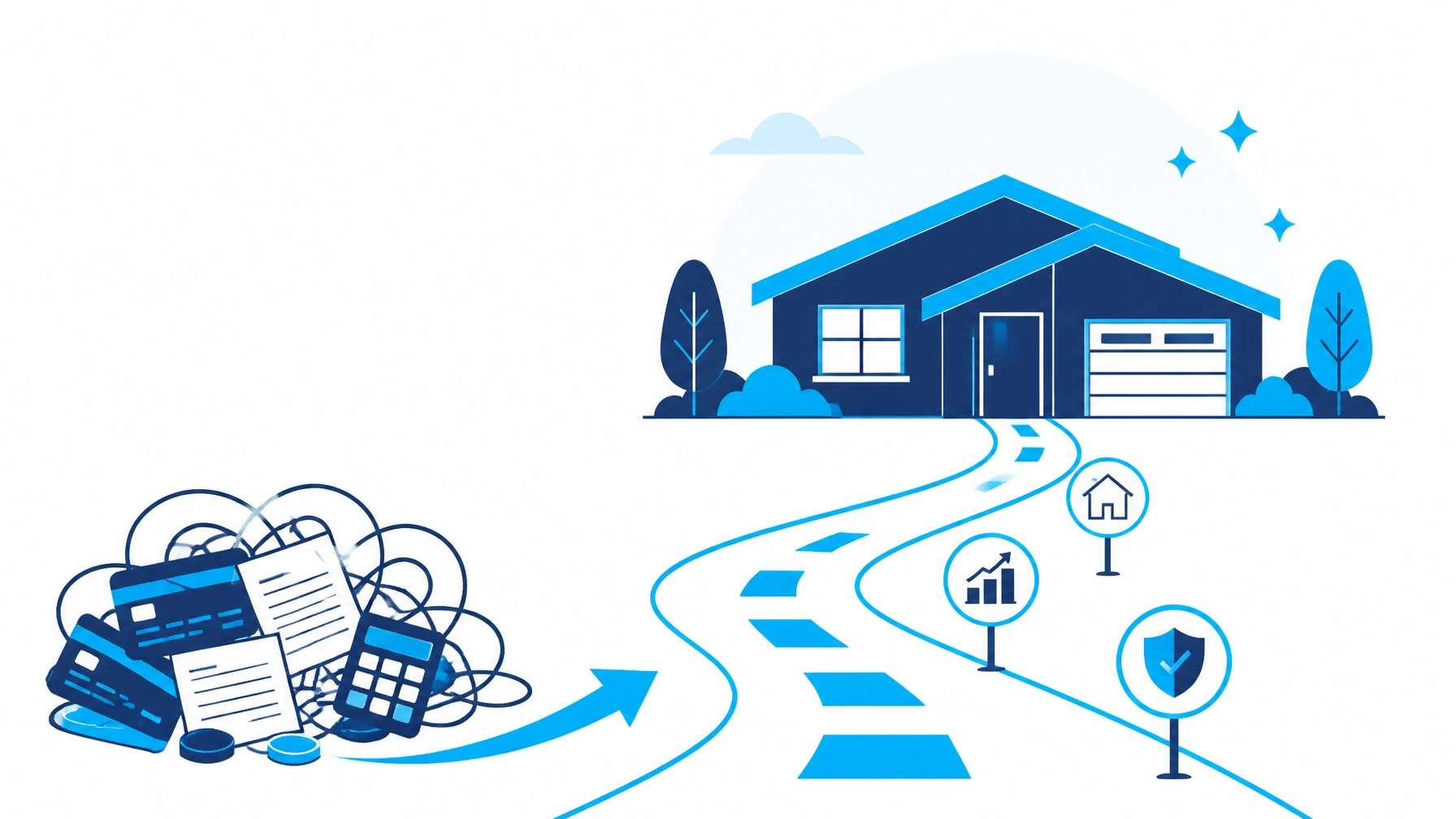
High-interest personal debt can quietly delay your ability to pay off your home loan early. Credit cards, personal loans and buy-now-pay-later accounts can absorb cash flow that could otherwise reduce your mortgage principal.
The most effective approach to personal debt reduction in Australia is usually tactical rather than dramatic: sequence your repayments, reduce expensive interest, protect your cash flow and redirect each cleared repayment towards your home loan.
This playbook explains how to do that.
Important: Interest rates, lending policies and eligibility criteria change. The examples in this article are illustrative only and are not personal financial advice.
Why personal debt should be addressed before accelerating your mortgage
As at the latest available Reserve Bank of Australia data, the cash rate target was 4.35%, effective from 12 August 2026. The cash rate influences broader borrowing costs, but credit card rates generally remain much higher and do not move one-for-one with the RBA cash rate.
Many Australian credit cards charge approximately 19–22% per annum, while personal loans may be available at significantly lower rates for stronger applicants. The exact rate depends on your lender, credit profile, income, existing commitments and loan structure.
For example, $10,000 charged at 20% represents approximately $2,000 in annual interest before repayments and compounding. At 10%, the equivalent starting interest is approximately $1,000. That difference can become meaningful when redirected towards your mortgage.
The key is not simply to reduce the number of accounts you have. It is to:
- Reduce the most expensive interest first.
- Choose a realistic repayment sequence.
- Avoid extending short-term debt unnecessarily.
- Redirect cleared repayments towards your home loan.
Step 1: Build a debt priority map
Before applying for a new loan or changing your mortgage, list every debt in one place.
Record:
- Current balance.
- Interest rate.
- Minimum repayment.
- Credit limit.
- Remaining loan term.
- Annual, monthly or establishment fees.
- Early repayment or break costs.
- Whether the rate is fixed or variable.
Then group the debts into three categories:
- High-cost revolving debt: credit cards and some store cards.
- Structured unsecured debt: personal loans, car loans and similar facilities.
- Home loan debt: generally lower-rate secured debt, but often the largest long-term cost.
This simple map shows where each dollar is doing the most work.
You can also review Flexible Mortgages’ practical debt consolidation guide for a broader comparison of consolidation options. The focus here is what to do first, next and after the debt is cleared.
Step 2: Choose between debt avalanche and debt snowball
Once minimum repayments are covered, direct your surplus cash towards one priority debt.
Debt avalanche: the interest-saving method
The debt avalanche method targets the debt with the highest interest rate first.
The process is:
- Pay the minimum on every debt.
- Direct all additional money towards the highest-rate debt.
- When that debt is cleared, redirect its repayment to the next-highest-rate debt.
- Continue until all debts are repaid.
This method is mathematically efficient, particularly when a credit card is charging 19–22% interest.
Debt snowball: the motivation method
The debt snowball method targets the smallest balance first, regardless of the interest rate.
It may suit you if:
- You have several small accounts.
- You need visible progress to stay motivated.
- Managing multiple repayments feels overwhelming.
- A quick early win would help you maintain consistency.
The avalanche method may save more interest. However, the best method is the one you can follow consistently. A strategy that is theoretically optimal but abandoned after two months is less effective than a practical plan you maintain for several years.
Step 3: Deal with credit cards strategically
Be cautious with balance transfers
A balance transfer can move an existing credit card balance to a new card with a promotional low or 0% interest rate for a limited period.
This can be useful when:
- The balance is relatively modest.
- You have a reliable monthly surplus.
- You can clear the balance before the promotional period ends.
- You will not continue spending on the old or new card.
However, a 0% offer is not automatically a cheap solution. Check:
- The balance transfer fee.
- The annual or monthly account fee.
- The promotional period.
- The interest rate after the offer ends.
- Whether new purchases receive the promotional rate.
- The required minimum repayment.
For example, a $6,000 balance transferred for 12 months requires repayments of at least $500 per month, plus any fees, to be cleared within the promotional period. Paying only the minimum may leave a substantial balance when the interest-free period ends.
Avoid the minimum repayment trap
Minimum repayments are designed to keep the account current, not necessarily to clear the balance quickly. A repayment may cover interest, fees and only a small amount of principal.
Practical steps include:
- Freeze or remove the card from your banking app.
- Stop using the card for new discretionary spending.
- Set an automatic repayment above the minimum.
- Reduce or close the facility after it is cleared.
- Do not treat the available credit limit as emergency savings.
If you need to retain a card, consider reducing the limit to an amount that is appropriate for your circumstances. A high unused limit can also affect future borrowing capacity.
Step 4: Review personal loans, not just their interest rates
A personal loan can be cheaper and more structured than revolving credit card debt, but the advertised rate is only one part of the comparison.
Assess:
- Fixed versus variable interest.
- Establishment and ongoing fees.
- Early repayment fees.
- The remaining term.
- Whether extra repayments are permitted.
- The total amount repayable.
- Whether refinancing resets the loan term.
A fixed-rate personal loan can provide repayment certainty, but may restrict additional repayments or create early exit costs. A variable-rate loan may offer greater flexibility, although repayments or interest costs can change.
If you have multiple personal loans, consolidation may simplify your budget. Nevertheless, do not choose a longer term purely because it produces a lower monthly repayment. Lower monthly costs can sometimes mean higher total interest.
Step 5: Compare debt consolidation options carefully
There are three common consolidation pathways.
1. Balance transfer credit card
Potential advantage:
- Temporary reduction in interest.
Main risk:
- The balance is not cleared before the promotional period ends.
2. Debt consolidation personal loan
Potential advantages:
- One regular repayment.
- A defined repayment date.
- Potentially lower interest than credit cards.
- Less reliance on minimum repayments.
Main risks:
- Fees may reduce the benefit.
- A longer term may increase total interest.
- Reusing cleared cards can create double debt.
3. Folding personal debt into a home loan
Homeowners may be able to refinance or increase their mortgage using available equity. This can reduce the immediate interest rate, but it requires particularly careful structuring.
The risks include:
- Turning a short-term debt into 25–30-year debt.
- Paying interest for far longer than originally intended.
- Securing previously unsecured debt against your home.
- Increasing the total mortgage balance.
- Extending your home loan term.
- Potential refinancing, valuation, package or break costs.
If mortgage consolidation is suitable, create a separate repayment target for the debt being added. For example, instead of allowing $20,000 to remain within a 25-year mortgage, set a goal to clear that portion within three to five years.
A lower rate is only helpful if the repayment behaviour also changes.
How consolidation affects lender assessments
Debt consolidation can improve monthly cash flow, but applying for new credit can also affect how lenders assess you.
Australian lenders commonly consider:
- Income and employment stability.
- Existing loan repayments.
- Credit card limits, not only current balances.
- Personal loans, car loans and buy-now-pay-later commitments.
- Your credit history and credit score.
- Living expenses.
- Serviceability, meaning your ability to meet repayments after the lender applies an interest-rate buffer.
- HEM, or the Household Expenditure Measure, a benchmark used by many lenders when assessing living expenses.
Your actual expenses may be compared with a lender’s HEM benchmark, and the lender may use the higher figure in its assessment. As a result, consolidation does not automatically increase borrowing capacity.
To present a clearer position:
- Consolidate only where the total cost and cash flow improve.
- Close or reduce unused credit limits after debts are paid.
- Avoid making several credit applications in a short period.
- Keep evidence of regular repayments.
- Prepare a realistic household budget before applying.
Step 6: Redirect cleared repayments to your home loan
The most important step is what happens after personal debt is cleared.
Suppose you eliminate:
- $350 per month in credit card repayments.
- $250 per month in personal loan repayments.
That creates $600 per month of available cash flow. If the money simply disappears into general spending, the long-term benefit may be limited. If it is redirected to the mortgage, you contribute an additional $7,200 per year towards reducing the home loan balance.
Possible mortgage reduction strategies include:
- Increasing your regular repayment.
- Making fortnightly repayments where appropriate.
- Paying annual bonuses or tax refunds into the loan.
- Maintaining repayments if interest rates fall.
- Using an offset account for savings and regular income.
- Reviewing the loan structure and fees.
An offset account is a linked transaction account where the balance reduces the amount of your home loan on which interest is calculated. For example, $30,000 in an offset against a $500,000 loan may mean interest is calculated on approximately $470,000, subject to the lender’s terms.
The mortgage offset account benefits can be particularly useful when you maintain an emergency fund, receive regular income or manage household savings through the account. Check the loan’s fees, eligibility requirements and any balance caps before relying on the feature.
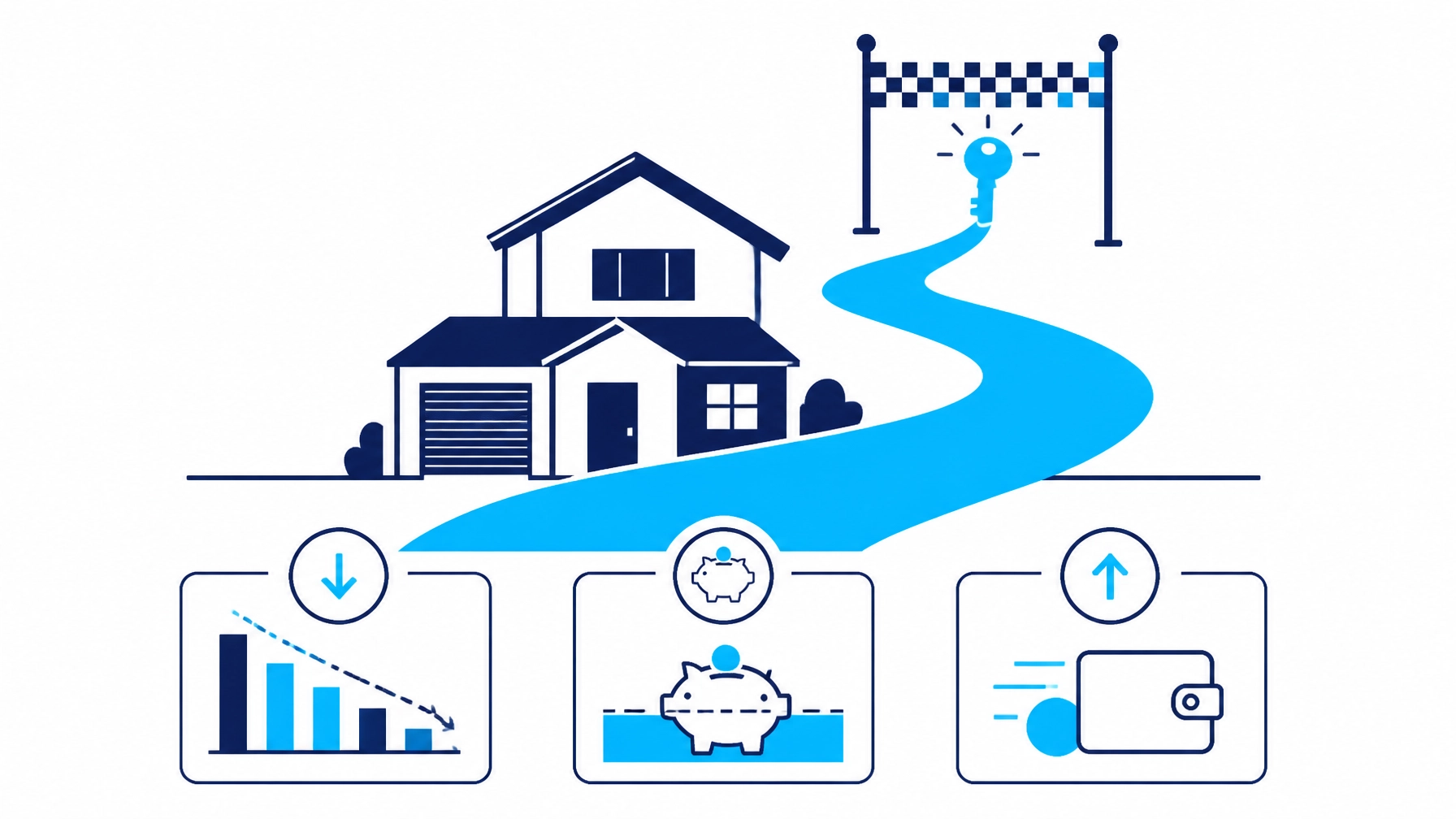
A practical personal debt reduction action plan
Follow this sequence:
- List every debt with balances, rates, limits, fees and terms.
- Stop adding new revolving debt while building the plan.
- Protect a modest emergency buffer so unexpected costs do not return to the credit card.
- Pay every minimum repayment on time.
- Choose avalanche or snowball and nominate one target debt.
- Compare balance transfer, personal loan and mortgage options using total cost.
- If consolidating into the mortgage, set a separate three-to-five-year target.
- Close or reduce old facilities once they are paid out.
- Redirect the former repayments immediately to your home loan or offset account.
- Review progress quarterly, including interest rates, fees, debt balances and cash flow.
For budgeting, use four priority buckets:
- Essentials: housing, utilities, food, transport and insurance.
- Minimum commitments: required repayments on every debt.
- Debt attack: all available surplus directed to the nominated priority.
- Future protection: emergency savings and, after personal debts are cleared, additional mortgage repayments.
This sequence creates a direct link between personal debt reduction and the goal to pay off your home loan early.
Start with a Smart Home Loan discovery discussion
The right solution may involve changing repayment behaviour, refinancing, restructuring debt, using an offset account or combining several strategies. It depends on your income, existing facilities, equity, goals and borrowing capacity.
Flexible Mortgages can help you explore these options through a no-obligation Smart Home Loan discovery discussion. It is an opportunity to review your current position and identify potential mortgage reduction strategies without pressure.
Clearing expensive personal debt can free up cash flow, reduce financial stress and help you build equity sooner. With the right structure and consistent follow-through, the path towards financial security and long-term financial freedom can be smoother than many people expect.