
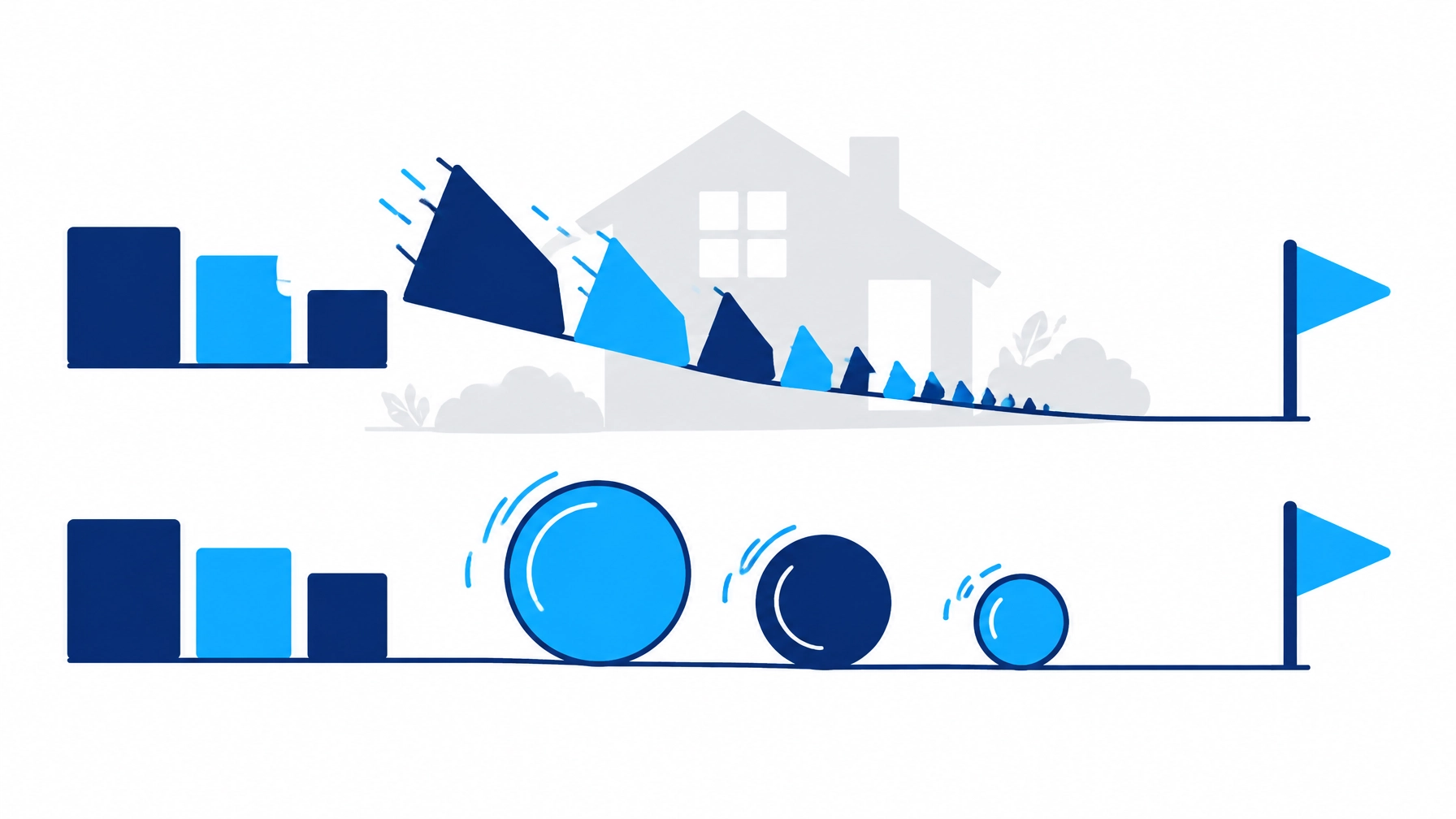
If you’re balancing a mortgage with credit-card bills, a personal loan or car repayments, it can be hard to know which debt to tackle first. Two popular approaches, the debt avalanche and the debt snowball, give you a clear order for using any extra money.
Both methods start with the same basics: keep up with minimum repayments on every debt and avoid adding to balances where possible. The difference is where your extra repayments go. That choice can affect interest costs, motivation and how quickly you become debt-free.
How the debt avalanche works
With the avalanche method, you direct extra repayments to the debt with the highest interest rate first, while continuing to make at least the required minimum payment on every other debt. Once the target debt is cleared, you roll its former repayment into the next-highest-rate debt.
The logic is straightforward: reducing the most expensive balance first generally minimises interest, assuming you keep to the plan and other loan terms remain unchanged.

The avalanche may suit you if you:
- Prefer a numbers-focused approach.
- Can stay committed even if the first debt takes time to clear.
- Want to prioritise reducing interest costs.
Its main challenge is that progress can feel slow if the highest-interest debt is also your largest balance.
How the debt snowball works
With the snowball method, you target the smallest balance first, regardless of its interest rate. You pay the minimum on all other debts and put your extra repayments towards the smallest one. When it’s cleared, you roll that repayment into the next-smallest balance.
The appeal is a quick, visible win. Clearing an account can make the plan feel achievable and help you build momentum.

The snowball may suit you if you:
- Find it easier to stay motivated by quick wins.
- Have several smaller debts you want to clear and simplify.
- Are more likely to stick with a plan when you can see early progress.
Because it doesn’t prioritise interest rates, the snowball may cost more interest overall than the avalanche. The difference depends on your balances, rates, fees, repayment rules and how consistently you make extra payments.
Worked example: three common Australian debts
Consider this simplified example:
| Debt | Balance | Interest rate |
|---|---|---|
| Credit card | $4,000 | 22% p.a. |
| Personal loan | $12,000 | 14% p.a. |
| Car loan | $9,000 | 9% p.a. |
Assume you have $600 a month to pay above the required minimums, make all repayments on time and don’t add new borrowing.
- Avalanche order: credit card, personal loan, car loan.
- Snowball order: credit card, car loan, personal loan.
Both methods start with the credit card because it is both the smallest balance and the highest-rate debt. The approaches differ once it is cleared: the avalanche targets the 14% personal loan, while the snowball targets the 9% car loan.
That difference matters. At the starting balances, the personal loan’s rate is five percentage points higher than the car loan’s. On a $9,000 balance, that gap represents about $450 in interest over a year before allowing for repayments and a falling balance. Directing extra repayments to the higher-rate loan generally reduces interest faster.
These figures are illustrative estimates, not a forecast or guarantee. The information provided isn’t enough to calculate a reliable total interest saving or payoff date: minimum repayments, remaining terms, fees and interest-calculation methods all affect the result. In particular, a claim that this example will save a set amount, such as $1,500, would need a stated calculation model and assumptions.
Which method should you choose?
There is no single method that works best for everyone. The avalanche is usually the more interest-efficient approach when you can stick with it. The snowball can be a practical choice if early wins make you more likely to keep going.
A simple way to decide:
- List each debt with its current balance, interest rate, minimum repayment and any relevant fees.
- Protect your essentials. Budget for housing, bills and required repayments before committing extra money.
- Choose your target order: highest rate for the avalanche or smallest balance for the snowball.
- Set a realistic extra repayment amount that you can maintain without needing to borrow again.
- Review the plan regularly, especially if rates, income or loan terms change.
The key is choosing an approach you can maintain. If minimum payments are becoming difficult, contact your lender early. The Australian Government’s MoneySmart guide to getting debt under control outlines practical next steps. You can also contact the National Debt Helpline for free financial counselling.
Could debt consolidation help?
Debt consolidation means combining multiple debts into one loan or credit facility. Some Australian homeowners consider moving high-interest debts into a lower-rate product, potentially including their home loan. This may reduce repayments or free up cash flow, but it does not automatically reduce the total cost of your debt.
Before consolidating, compare:
- The new interest rate and whether it is fixed or variable.
- Establishment, ongoing, discharge and other fees.
- The total amount of interest over the time you expect to take to repay.
- Whether the new loan term is longer than the debts you’re replacing.
- What happens if you miss a repayment.
If unsecured debt is added to a home loan, your home may become security for that debt. A lower rate can also be outweighed by repaying the balance over a much longer period. MoneySmart’s debt consolidation and refinancing guidance explains the trade-offs to consider.

A mortgage offset account is different from consolidation. It is a transaction account linked to an eligible home loan; the balance can reduce the amount on which home-loan interest is calculated. Check the loan’s fees and rate, and make sure the offset arrangement is operating as expected. An offset is not a reason to carry a high-interest credit-card balance: MoneySmart notes that credit-card interest rates are typically much higher than home-loan rates.
What to do after the debts are cleared
When a debt is paid off, its former repayment becomes available cash flow. Rather than letting that money disappear into general spending, consider directing it towards your next financial priority, such as an emergency buffer or additional home-loan repayments, if your loan allows them.
Extra repayments or a suitable offset strategy may help you reduce mortgage interest and pay off your home loan early. The potential benefit depends on your loan structure, interest rate, fees and budget, so check the terms before making changes.
For practical budgeting tips in Australia, MoneySmart’s budget planner can help you map income and expenses and see what you can realistically put towards repayment.
A clear plan can make progress easier
For many people, personal debt reduction in Australia starts with a simple choice: target the highest rate to prioritise interest savings, or the smallest balance to build momentum. Both methods can work when you keep up with minimums, avoid adding new debt and make extra repayments consistently.
If you’re also considering how debt repayments fit alongside your mortgage, Flexible Mortgages offers a no-obligation Smart Home Loan discovery discussion. It’s an opportunity to discuss your circumstances and explore options, without pressure to proceed. A considered plan can support greater financial security and long-term success.