
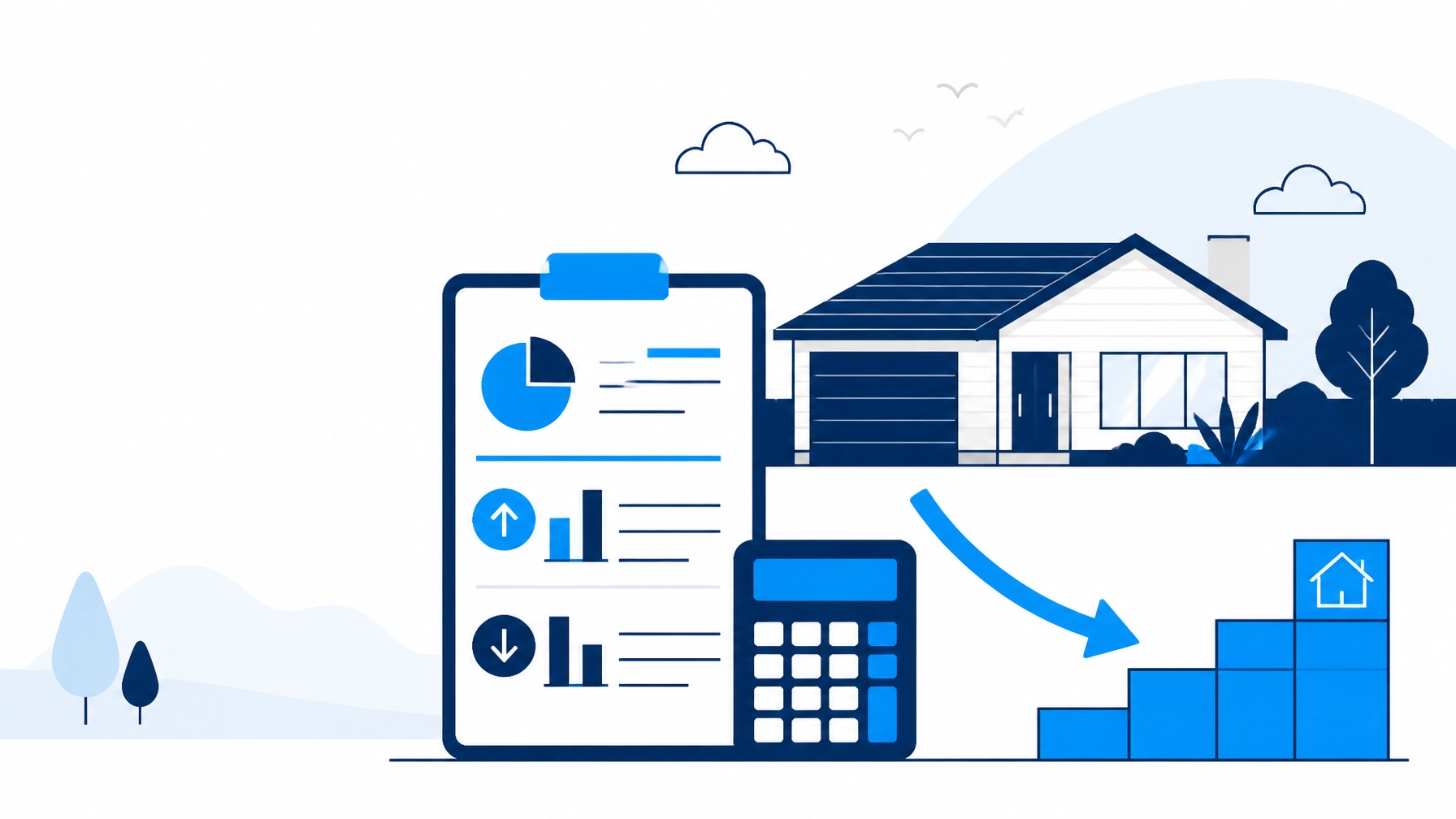
For many Australian homeowners, the mortgage is the largest expense in the household budget. While interest rates, property prices and lender policies can change, one factor remains within your control: how effectively you manage your cash flow.
A practical budget can do more than help you avoid overspending. It can reveal surplus cash that may be redirected towards your home loan, reducing interest and helping you build equity sooner. Combined with a suitable loan structure, everyday financial habits can produce meaningful long-term results.
These budgeting tips for Australia are designed to help you connect your household spending decisions with your mortgage strategy.
Why your household budget affects your mortgage
A home loan is usually calculated over a long period, often 25 or 30 years. During that time, even small amounts of additional interest can add up substantially.
Your budget affects your mortgage in several ways:
- It shows how much you can comfortably pay above the minimum repayment.
- It helps you maintain savings in an offset account.
- It reduces the risk of relying on high-interest credit for unexpected expenses.
- It gives you evidence when reviewing or refinancing your loan.
- It helps you make decisions based on facts rather than assumptions.
In reality, paying off a mortgage faster does not necessarily require extreme lifestyle changes. The key is to identify sustainable improvements and direct them consistently towards your home loan.
1. Build a complete Australian household budget
Start by recording your total income and expenses. Include regular costs as well as less frequent expenses that can otherwise cause budget surprises.
Your income may include:
- Salary or wages
- Overtime and commissions
- Government payments
- Rental income
- Business income
- Investment income
Your expenses should include:
- Mortgage repayments
- Council rates and insurance
- Electricity, gas, water and internet
- Groceries and household items
- Petrol, public transport and vehicle costs
- School, childcare and medical expenses
- Credit cards, personal loans and buy now, pay later commitments
- Subscriptions, dining out and entertainment
- Annual bills, registration and maintenance
The Australian Securities and Investments Commission’s Moneysmart Budget Planner can help you organise these figures.
Review at least three months of bank and credit card statements so your budget reflects your actual spending. If you estimate too optimistically, your proposed extra mortgage repayment may not be sustainable.

2. Separate essential, flexible and irregular expenses
Once you have listed your expenses, divide them into three categories.
Essential expenses
These are costs that are difficult to avoid, such as:
- Mortgage repayments
- Utilities
- Groceries
- Insurance
- Transport
- Medical care
- Education and childcare
Flexible expenses
These can usually be adjusted when necessary:
- Takeaway meals
- Entertainment
- Clothing
- Hobbies
- Non-essential shopping
- Streaming services
Irregular expenses
These may only occur quarterly, annually or occasionally:
- Car registration and servicing
- Council rates
- Insurance renewals
- School expenses
- Home repairs
- Christmas and birthdays
- Medical or dental costs
For irregular costs, estimate the annual amount and divide it by 12. Setting aside that monthly amount can make your budget smoother and prevent you from taking money back out of your offset or redraw facility.
Furthermore, reviewing flexible expenses does not mean removing every enjoyable activity. A better approach is to decide which expenses provide genuine value and reduce the ones that do not.
3. Create a mortgage-focused surplus
After accounting for your normal living expenses, identify the amount left over each pay cycle.
For example, your budget may show a consistent surplus of:
- $50 per week
- $200 per month
- $500 per month
- A larger annual amount from bonuses or tax refunds
Rather than treating this money as available for general spending, assign it a clear purpose. You could:
- Set up an automatic additional mortgage repayment.
- Transfer the money into an eligible offset account.
- Keep part of it in an emergency buffer and direct the remainder towards the loan.
- Use a combination of regular extra repayments and occasional lump sums.
Even modest additional amounts may reduce the principal: the amount originally borrowed: over time. A lower principal means less interest is charged in future, allowing more of each repayment to reduce the loan balance.
Before making extra payments, check your lender’s rules. Fixed-rate loans may restrict additional repayments or charge costs if limits are exceeded.
4. Use an offset account strategically
An offset account is a transaction account linked to your mortgage. Its balance is deducted from your loan balance when the lender calculates interest.
For example, if your mortgage balance is $600,000 and you keep $20,000 in a full offset account, interest may be calculated on a net balance of $580,000. The exact operation depends on the lender and loan product.
A practical offset strategy may include:
- Having your salary paid directly into the offset.
- Paying household bills from the offset.
- Keeping your emergency fund there.
- Holding money for annual expenses in the account.
- Transferring surplus savings into the offset instead of a separate low-interest account.
Many Australian home loans calculate interest daily, so maintaining a higher average balance can improve the benefit. However, offset loans may have higher interest rates or annual package fees. Compare the total cost of the loan: not just the feature itself.
Moneysmart explains how mortgage offset accounts work, including the importance of checking fees and conditions.
5. Understand extra repayments and redraw
Extra repayments reduce the balance of your loan directly. Some loans also provide a redraw facility, which may allow you to access eligible additional repayments later.
These features are not identical:
- Offset account: Your money remains in a separate transaction account and is generally easy to access.
- Extra repayment: Your money is paid into the mortgage and reduces the loan balance.
- Redraw facility: A lender may allow you to withdraw eligible extra repayments, subject to its rules.
An offset may suit you if you want flexibility and regularly maintain cash savings. Extra repayments may suit you if you prefer stronger discipline and do not need frequent access to the funds.
Before using either strategy, confirm:
- Whether your loan is fixed, variable or split.
- Any limits on extra repayments.
- Redraw minimums and transaction limits.
- Whether redraw access can be restricted.
- Fees or interest-rate differences attached to the feature.
- What happens to repayments if you redraw funds.
Moneysmart’s guidance on paying off your mortgage faster is a useful starting point.

6. Automate the habits that create mortgage progress
A budget is most effective when it operates automatically.
Consider setting up:
- An automatic transfer on payday for extra repayments.
- Separate savings for annual bills.
- A weekly grocery and discretionary spending limit.
- Automatic payment of your regular mortgage repayment.
- Alerts when account balances or spending reach a chosen threshold.
You can also review your budget after a pay rise, rate change, refinancing, major household change or change in childcare or transport costs.
If your mortgage interest rate falls and your minimum repayment decreases, consider continuing to pay the previous amount if your budget allows. The difference can become an additional repayment. However, confirm that your lender applies the extra amount as you expect.
7. Review your loan structure: not just your spending
Budgeting can reveal that your current loan no longer fits your circumstances. For example, you may be paying for an offset feature you rarely use, or you may have significant savings sitting in an account that does not reduce mortgage interest.
Other issues worth reviewing include:
- Whether your interest rate remains competitive.
- Whether your loan offers useful repayment flexibility.
- Whether a split loan could balance fixed-rate certainty with variable-rate features.
- Whether refinancing costs outweigh the potential savings.
- Whether debt consolidation would improve cash flow without extending expensive debt unnecessarily.
- Whether your loan structure supports your future plans.
A loan with a lower advertised rate is not automatically the best option. Fees, features, repayment rules and your personal cash-flow habits all matter.
A Smart Home Loan discovery discussion can help you examine these factors in the context of your goals. Flexible Mortgages also provides guidance on home loans and finance options, including fixed, variable and split loan structures.

A simple monthly mortgage budgeting checklist
At the end of each month, ask yourself:
- Did we spend within our planned limits?
- What expenses were higher than expected?
- Did we maintain our emergency buffer?
- How much surplus cash did we create?
- Was that surplus directed to the offset or mortgage?
- Are we paying for subscriptions or services we no longer use?
- Has our income or household situation changed?
- Does our current loan still suit the way we manage money?
This review should take less than an hour once your system is established. In addition, it can help you identify small changes before they become significant financial problems.
The long-term benefit of consistent budgeting
Interest-saving mortgage tips are most effective when they become routine. A single extra repayment may help, but a reliable system can continue working through changing expenses, income and interest-rate conditions.
The goal is not simply to repay your mortgage quickly at any cost. You also need to maintain an emergency buffer, manage other debts and preserve a reasonable quality of life. A sustainable plan is more likely to support long-term financial security.
Flexible Mortgages helps homeowners and prospective buyers explore loan structures and strategies designed to improve financial efficiency. Depending on your circumstances, a tailored approach may help you build equity sooner and avoid unnecessary interest over the life of the loan.
If you would like to understand how your budget and current mortgage work together, arrange a no-obligation Smart Home Loan discussion. It is an opportunity to review your options, ask questions and identify practical next steps: smoothly and without pressure.