
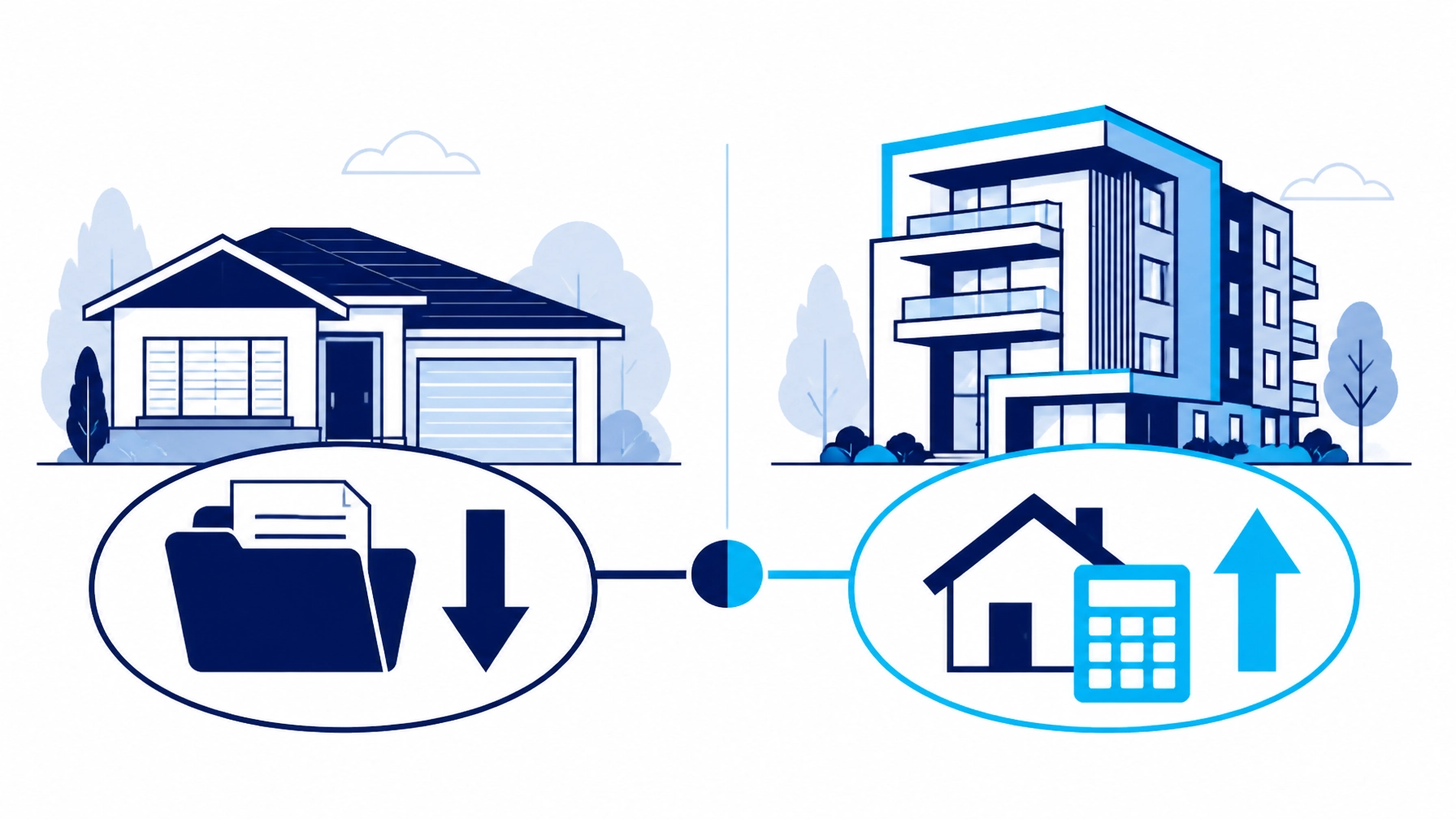
Australia’s negative gearing rules are scheduled to change from 1 July 2027, the beginning of the 2027–28 income year. For property investors, the most important distinction will be whether an investment property is:
- An existing property held before the announcement date
- An established property acquired after 12 May 2026
- An eligible new residential build
The Australian Government’s stated policy is to limit full negative gearing to new builds, while protecting existing arrangements for properties already held before Budget night.
These changes may affect borrowing decisions, cash-flow planning and the type of investment property Australia investors consider. However, the rules are easier to understand once the key dates and categories are separated.
Important: This article provides general information only. Tax outcomes depend on your circumstances, ownership structure and the final legislation. Obtain advice from a registered tax professional before making an investment decision.
What is negative gearing?
Negative gearing occurs when the deductible costs of owning an investment property are greater than the rental income it produces.
Common deductible expenses may include:
- Interest on an investment loan
- Property management fees
- Repairs and maintenance
- Council and water rates, where applicable
- Insurance
- Certain eligible depreciation deductions
For example, if an investment property produces $35,000 in annual rent but has $42,000 in deductible expenses, it has a net rental loss of $7,000.
Under the traditional rules, that loss may be deducted from other taxable income, such as salary or business income. This can reduce the investor’s taxable income for that year.
The strategy has never meant that an investor receives the entire loss back. The tax benefit is generally only a portion of the loss, based on the investor’s applicable tax rate. The property still needs a sound long-term investment case, including appropriate location, rental demand, borrowing costs and capital growth potential.
What are the Australian government negative gearing changes?
From 1 July 2027, full negative gearing for residential property is intended to be limited to eligible new residential builds.
For established residential properties acquired after 7:30 pm AEST on 12 May 2026, rental losses will be quarantined. In practical terms, these losses will not be available to reduce salary, wages or unrelated business income.
Instead, they may generally be used against:
- Rental income from residential property
- Income from other eligible residential property investments
- Capital gains from residential property
- Future eligible residential property income or gains
Unused losses can be carried forward until they can be applied under the new rules.
The official Australian Government tax reform summary states that existing arrangements will remain unchanged for properties held before Budget night, while investors in new builds will continue to deduct eligible losses from other income.

The three property categories investors need to understand
1. Properties acquired before 12 May 2026
Properties held before the announcement time on 12 May 2026 are expected to be grandfathered.
Grandfathering means that an existing arrangement is protected from a future rule change. For these properties, current negative gearing treatment is intended to continue, including the ability to deduct eligible rental losses against other income.
This protection is designed to recognise investment decisions made before the policy was announced.
You should retain clear records showing:
- The contract exchange date
- The settlement date
- The ownership structure
- Loan documents and refinancing history
- Annual rental income and property expenses
If a property is transferred, sold or moved into another ownership structure, the grandfathering treatment may be affected. This is an area where legal and tax advice is important.
2. Established properties acquired after 12 May 2026
An established property is generally an existing dwelling that has already been lived in or previously used as a residential property.
For an established investment property acquired after the announcement date:
- Traditional negative gearing treatment is expected to continue during the transition period up to 30 June 2027
- From 1 July 2027, rental losses will be quarantined
- Those losses will not reduce salary or wage income
- Unused losses can be carried forward
- The losses may later be applied against eligible residential property income or capital gains
This does not mean the property’s expenses disappear or become non-deductible. Rather, the timing and type of income against which the loss can be used will change.
3. Eligible new residential builds
New builds remain eligible for full negative gearing under the announced policy.
This means an investor in a qualifying new residential dwelling may continue to deduct eligible rental losses against other taxable income, including salary and wages.
The policy is intended to direct more investment towards additional housing supply. Depending on the final legislation, eligible properties may include certain:
- Newly constructed apartments
- Off-the-plan dwellings
- Homes built on vacant land
- Knock-down rebuild projects that increase the number of dwellings
- Newly built properties that meet the relevant “new dwelling” requirements
Not every renovation, extension or replacement dwelling will necessarily qualify. For example, improving an existing house or adding a granny flat may not automatically make the property an eligible new build.
The precise definition and evidence requirements should be confirmed before signing a contract.
What does “quarantined losses” mean in practice?
Consider an investor who buys an established property after 12 May 2026.
From 2027–28, the property produces:
- Rental income: $40,000
- Deductible expenses: $46,000
- Net rental loss: $6,000
Under the traditional rules, the $6,000 loss could potentially reduce the investor’s taxable salary or other income.
Under the proposed changes, the $6,000 loss would be quarantined. It could not be used to reduce wages. Instead, it would be carried forward and may be used against future residential rental income or a relevant residential capital gain.

The tax deduction may therefore still have value, but the benefit could be delayed. This makes cash-flow forecasting particularly important.
How could the changes affect investment property decisions?
The reforms may influence investor behaviour in several ways.
Cash flow may become more important
If losses cannot immediately reduce salary income, investors may need to fund a larger portion of the property’s shortfall from their own cash flow.
Before proceeding, calculate:
- Expected rent
- Interest repayments
- Rates and insurance
- Property management costs
- Maintenance allowances
- Vacancy periods
- Land tax and other state-based costs
- Potential interest-rate changes
A property that appears attractive after tax may have a very different cash-flow profile under the new rules.
New builds may receive greater attention
Because eligible new builds retain access to full negative gearing, some investors may compare new construction with established housing more closely.
However, tax treatment should not be the only reason to buy a new property. Also assess:
- Location and tenant demand
- Builder and developer reputation
- Construction timelines
- Body corporate fees
- Depreciation assumptions
- Resale appeal
- Comparable rental evidence
- The quality and durability of the property
A tax benefit cannot compensate for an unsuitable property or an inflated purchase price.
Existing portfolios may need a review
Investors with multiple properties should map each asset according to:
- Acquisition date
- Property type
- Ownership entity
- Loan structure
- Current rental performance
- Expected future expenses
- Whether the property is grandfathered
A portfolio review can help identify which properties are protected, which may be affected and whether the overall borrowing structure remains appropriate.
What should investors do before 2027–28?
The key is to make decisions based on the complete financial position rather than reacting to headlines.
Step 1: Confirm the property’s classification
Ask whether the property is:
- Grandfathered because it was acquired before 12 May 2026
- An established property acquired after that date
- An eligible new residential build
- Covered by a specific exemption or special arrangement
Do not assume that a property qualifies as a new build without checking the relevant requirements.
Step 2: Model both tax and cash-flow outcomes
Request projections for at least two scenarios:
- The current rules during the transition period
- The expected rules from 1 July 2027
Your accountant or tax adviser can estimate the tax treatment. A broker can help assess loan repayments, borrowing capacity and interest-rate sensitivity.
Step 3: Review your loan structure
Loan structure can influence flexibility, access to equity and the separation of investment and personal debt.
A review may consider:
- Fixed versus variable interest rates
- Offset accounts
- Split loans
- Interest-only versus principal-and-interest repayments
- Debt recycling strategies
- Equity access for future investments
- Whether refinancing could affect your broader plan
Any restructure should be assessed carefully because it may have tax, lending and transaction consequences.
Step 4: Avoid rushed decisions
The announcement date has already passed. Buying an established property simply to pursue a perceived tax advantage may create unnecessary risk.
The more useful questions are:
- Does the property make sense without relying on tax savings?
- Can you manage a period of vacancy or higher interest rates?
- Does the investment support your long-term goals?
- Is the ownership and lending structure suitable?
- Have you obtained independent tax and legal advice?
How a mortgage broker can help
A mortgage broker Australia investors choose should do more than compare interest rates. The right discussion should connect borrowing capacity with the investment strategy, expected cash flow and future plans.
At Flexible Mortgages, our investment loan discussions can help you examine:
- Borrowing capacity
- Refinancing opportunities
- Loan structure
- Equity position
- Cash-flow pressures
- Construction and new-build finance
- How a proposed purchase fits into your broader homeownership strategy
Our property investment service also highlights the value of reviewing a property before signing, rather than relying solely on information supplied by a selling agent.
A broker cannot provide personal tax advice, but can work alongside your accountant, financial adviser and solicitor to help ensure the finance strategy is practical.

The bottom line for negative gearing in Australia
The 2027–28 changes are significant, but they do not affect every investor in the same way.
In summary:
- Properties acquired before 12 May 2026 are intended to be grandfathered
- Established properties acquired after that date will have rental losses quarantined from 1 July 2027
- Quarantined losses may be carried forward and used against eligible residential property income or gains
- Eligible new residential builds remain able to access full negative gearing
- Cash flow, loan structure and property quality remain more important than tax deductions alone
The transition gives investors time to understand their position and obtain appropriate advice. A careful review can make the process smooth and stress-free, whether you are considering your first investment property Australia opportunity or managing an established portfolio.
For a no-obligation discussion about borrowing capacity, investment lending or your broader mortgage strategy, visit Flexible Mortgages or explore our home loan and investment finance services. The aim is to help you make a clear, informed decision that supports financial security and long-term success.
General information only. Tax and legislative settings may change. Consult a registered tax adviser, accountant or solicitor for advice about your circumstances. Lending is subject to assessment, eligibility and responsible lending requirements.