
For many Australian homeowners in 2026, the mortgage isn’t just a monthly bill: it’s a long-term financial puzzle. With home loan rates hovering around the 6% to 6.5% mark, the cost of "bad debt" has never been more apparent. Paying off a standard 25-year mortgage can often mean paying back two to three times the original value of your home in interest alone.
However, modern finance provides tools to fight back. Two of the most discussed strategies today are Offset Accounts and Debt Recycling. While both aim to reduce the burden of interest, they work in fundamentally different ways.
In this guide, we will break down the mechanics of each strategy, compare their benefits in the current 2026 economic climate, and help you determine which approach might shave years off your loan and thousands off your interest bill.
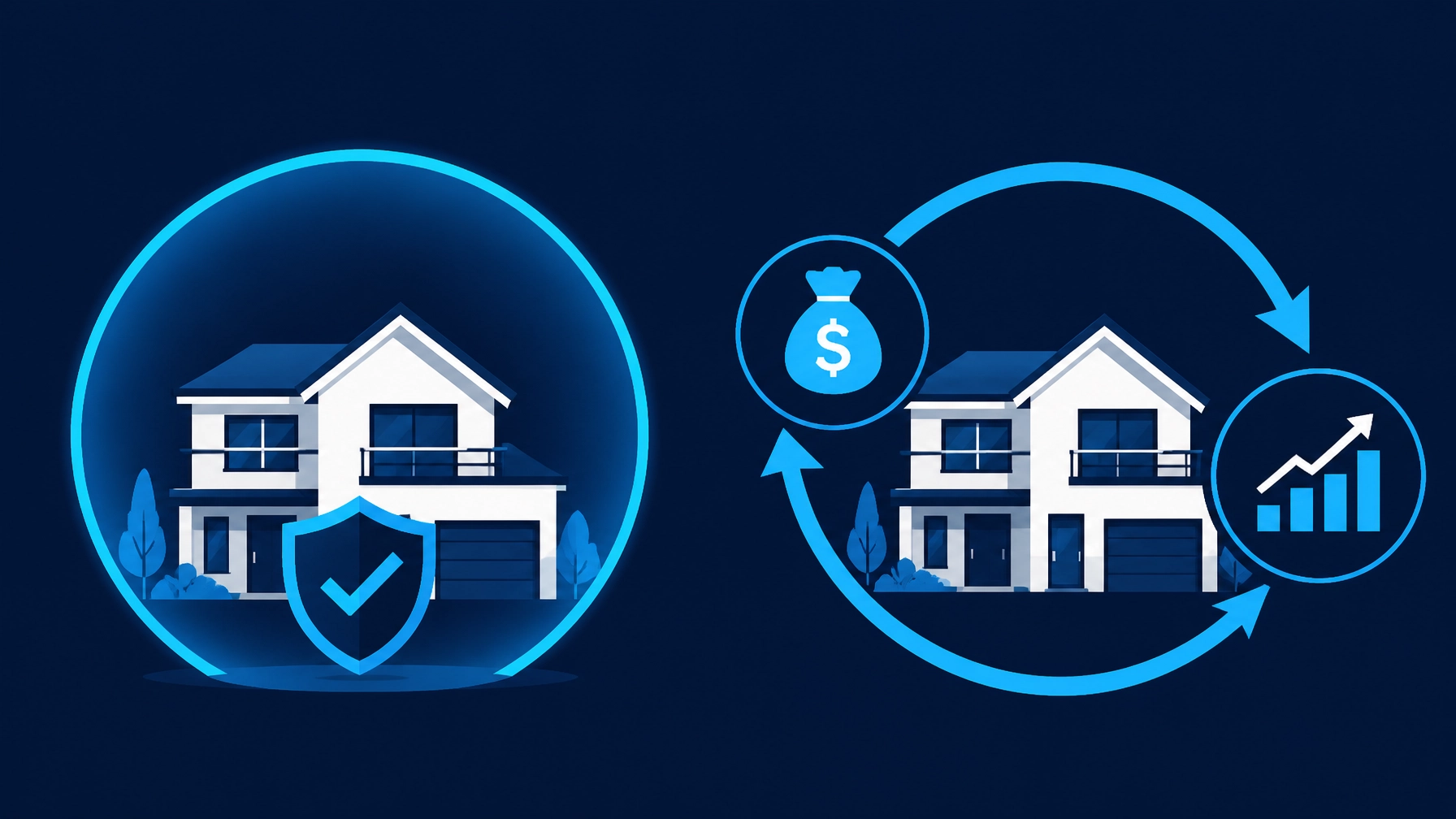
The Offset Account: Your Defensive Financial Shield
An offset account is one of the most popular features in the Australian mortgage market, and for good reason. It is essentially a transaction account linked directly to your home loan.
The balance you hold in this account is "offset" against your loan balance when interest is calculated. For example, if you have a $500,000 mortgage and $50,000 in your offset account, the bank only charges you interest on $450,000.
Why Offsets are Powerful in 2026
With interest rates at their current levels, the "return" on an offset account is surprisingly high. Because every dollar in your offset saves you from paying ~6.2% interest, it is mathematically the same as earning 6.2% on an investment: but with two major advantages:
- It is Risk-Free: Unlike the stock market, your "return" is guaranteed.
- It is Tax-Free: In Australia, the interest you save is not considered income, so you don't pay tax on it.
Furthermore, an offset account provides total liquidity. You can withdraw your money at any time for emergencies or life events without needing bank approval. This makes it a perfect tool for personal budgeting and building a safety net.

Debt Recycling: The Wealth-Building Engine
While an offset account is a defensive strategy, debt recycling is an offensive one. It is the process of turning "non-deductible" debt (your home loan) into "deductible" debt (an investment loan).
In Australia, the interest on a loan used to purchase income-producing assets: like shares or an investment property: is generally tax-deductible. The interest on your family home, however, is not. Debt recycling works by:
- Using surplus cash to pay down your home loan.
- Redrawing that same amount into a separate loan split.
- Using those funds to invest in assets that generate income.
As a result, your total debt remains the same, but a portion of the interest becomes a tax deduction. Over time, you "recycle" your entire mortgage into a tax-effective investment portfolio.
The Strategic Advantage
The key is to use the tax refunds and investment income generated by this new structure to pay down the remaining home loan even faster. This creates a powerful "snowball effect" that can significantly reduce your mortgage term: sometimes by up to 17 years if structured correctly.
As a strategic mortgage broker, we often see that homeowners who utilize debt recycling can build wealth and pay off their homes simultaneously, rather than waiting until the mortgage is gone to start investing.
Side-by-Side: How They Compare
To help you visualize the differences, here is a quick breakdown of how these two strategies stack up in the current market.
| Feature | Offset Account | Debt Recycling |
|---|---|---|
| Core Goal | Reduce interest on the home loan | Convert home debt to tax-deductible debt |
| Risk Level | Very Low (No market exposure) | Moderate (Market volatility) |
| Tax Impact | Tax-free savings | Tax-deductible interest + Taxable income |
| Liquidity | High (Cash is readily available) | Lower (Capital tied in investments) |
| Complexity | Simple (Set and forget) | High (Requires specific loan splits) |
| Best For | Emergency funds and short-term needs | High-income earners and long-term wealth |

The Math for 2026: Why Timing Matters
The effectiveness of these strategies is heavily influenced by your marginal tax rate and the current interest rate environment.
As of July 2026, many Australian taxpayers are benefiting from adjusted tax brackets. These changes mean that for some, the value of a tax deduction (debt recycling) has shifted slightly. However, for those in higher tax brackets, the ability to claim interest as a deduction remains one of the most effective ways to lower their annual tax bill.
In reality, an offset account is often the "easier" entry point. If your mortgage rate is 6.5% and your tax rate is 39%, your offset account is providing a "pre-tax equivalent return" of roughly 10.7%. This means you would need to find an investment that returns more than 10.7% annually (before tax) to beat the simple act of leaving your money in an offset account.
However, debt recycling offers the potential for compounding growth. While the offset saves you interest, it doesn't grow your capital. Debt recycling allows you to benefit from both the interest deduction and the long-term capital growth of your investments.
The "Smart Home Loan" Discovery: Why Not Both?
Many people believe they have to choose one or the other. At Flexible Mortgages, we believe the most effective strategy often involves a combination of both.
The key is to maintain your emergency buffer in an offset account for safety and liquidity, while strategically using surplus equity or cash flow for debt recycling to accelerate your path to financial freedom.
The transition from a standard 25-year "trap" to a strategic wealth-building structure is often smoother and more stress-free than homeowners expect. It simply requires the right loan architecture. Standard lenders often overlook these cost-saving opportunities because they prefer you to stay in debt for the full 25-year term.

Choosing the Right Path for Your Future
Deciding between an offset-focused approach or a debt recycling strategy depends on several factors:
- Your Risk Tolerance: Are you comfortable with market fluctuations?
- Your Investment Horizon: Are you looking at a 5-year or 20-year window?
- Your Loan Structure: Does your current bank allow for the clean loan splits required for debt recycling?
- Your Career Stage: Is your income likely to increase, making tax deductions more valuable in the future?
Furthermore, it is essential to ensure that your record-keeping is meticulous. The ATO requires a clear "paper trail" to prove that borrowed funds were used for investment purposes. This is where professional guidance becomes invaluable.
Take Control of Your Interest Bill Today
You don't have to settle for the standard 25-year mortgage path. Whether you choose the defensive strength of an offset account or the wealth-building potential of debt recycling, the most important step is to have a plan.
At Flexible Mortgages, we specialize in identifying the pitfalls of traditional lending and replacing them with proprietary homeownership strategies. We are committed to helping you gain equity faster and build a stronger foundation for your long-term financial independence.
Are you ready to see how much interest you could be saving?
We invite you to book a Smart Home Loan Discovery discussion. This is a no-obligation conversation where we analyze your current financial situation and identify the most effective loan structure for your specific goals.